There’s a specific loneliness in being an adult who feels the pull toward faith and wasn’t raised with any. Everyone else seems to have gotten the childhood manual — they know the songs, the vocabulary, when to stand, what the words mean. You’re thirty-something in the back row feeling like you snuck into someone else’s family reunion, certain that everyone can tell.
If that’s you, here’s the direct answer, from someone who walked in cold as a grown man: you don’t need the manual, because the manual was never the thing. Faith — as I’ve found it — is a heart posture and a relationship, not a checklist of tasks and technicalities. You’re allowed to start exactly where you are: skeptical, unpolished, wrestling, with no vocabulary and a complicated past. Wrestling counts. Honestly, wrestling might be most of it.
And one thing this piece will never do is pressure you. I’m not here to argue anyone into anything. I can only tell you what happened to me.
Nobody hands you a map at thirty
Coming to faith as an adult means every entry point feels like an exam you didn’t study for. The buildings have unwritten rules. The people speak in shorthand. The books are enormous and start in the wrong place. And adult life has trained you to never be a beginner in public — by thirty you’ve built a whole identity around being competent, which makes standing in a room where you’re the one who doesn’t know the words feel almost physically expensive.
Here’s what I’d tell you from the other side of that discomfort: the not-knowing isn’t a disqualification. It’s just unfamiliarity, and unfamiliarity burns off with attendance. Nobody who matters is grading you. Most of the people who look fluent are wrestling with things you can’t see. The room isn’t a performance you’re failing. It just looks that way from the back row, the first few times.
How it actually happened to me
My road in didn’t look religious at all. A few years ago I was miserable — genuinely friendless in a new state, at the end of a lease, out of ideas. I saw an entrepreneurs’ event on Instagram, at a racetrack four hours away, and I went alone — which was, at that point in my life, the exact thing I hated most in the world. Driving hours to walk into a crowd of strangers by myself was the whole fear, purchased at full price.
At that event I met the man who became my best friend. And about a year later, that friend dragged me into a church. I can’t dress this part up, and I’ve stopped trying: it never fully felt like my decision. The way I’ve described it since is that Jesus was dragging me in, and I’m wondering where we’re going, and he keeps telling me to trust him. That was 2024. Grown man, chosen — and still a little confused about the route, which I’ve come to think is normal.
The part that makes me laugh now: as a kid I wore cross chains because 50 Cent wore them — a solid decade before the cross meant a single thing to me. Some symbols apparently just wait.
A heart posture, not a task list
The biggest misunderstanding I carried in — and the one I’d most want to take off your shoulders — is that faith is a compliance program: attend the services, learn the rules, hit the reading quota, perform the improvement, get graded. A religion of tasks and technicalities. If that were the deal, I’d have washed out in a month, because I fail task lists I wrote for myself.
What I actually found is closer to a relationship than a curriculum. A heart posture — which direction you’re leaning, who you’re leaning toward — matters more than any completed checklist. You don’t clean yourself up to walk in; the walking in is the thing. The attendance, the fluency, the lingo — that’s furniture. Some of it grows on you, some never does, and none of it was ever the house.
The mess is part of it
I want to be honest about what happened next, because the brochure version of faith — instant peace, problems dissolving — wasn’t my experience. Faith didn’t arrive gently. It woke up all kinds of things I had pushed way down, and it was very messy and very brutal — and very good. All three at once, for a long stretch. Doors I’d nailed shut came open, and everything behind them was still there, waiting to be dealt with by a person who now had somewhere to set it down.
It taught me how to love. It taught me that people are good, that people are kind — and I didn’t think that was real before then. I’m aware of how that sentence reads from the outside; I’d have rolled my eyes at it once. But if you’re expecting faith to work like a life hack — friction out, comfort in — expect this instead: peace and disruption arriving in the same delivery. The mess wasn’t a malfunction. The mess was the renovation.
I’m bad at this, and I’m still in
Current status, with no polish: I’m awful at reading scripture. Genuinely bad at it — slow, inconsistent, working through the book the way you’d expect from a guy who never read his homework. I wrestle with things daily. There are weeks where the whole thing feels close and weeks where it feels like static. I have none of the finished-product-church-guy shine, and at this point I’ve stopped believing the shine is the goal.
Because here’s what I’ve noticed: the honesty seems to be the practice. You don’t graduate from the wrestling; you keep showing up to it, badly, on purpose, and somehow that’s the thing that was being asked for all along. If the polished version was the entry requirement, the building would be empty.
If you’re standing at the edge
No pressure, just logistics, from one adult beginner to another. Go once — with someone if you can, alone if you must; the friend who’ll go with you is probably one honest ask away. Sit in the back. You don’t have to sing. Ask your real questions out loud to somebody who won’t flinch — the doubts you think are disqualifying are the oldest questions in the building. Read slowly and badly, like me. And give it more than one visit before you rule, the same way you’d give a new city more than one weekend.
Commitment comes before love — I’ve found that true of cities, of people, and now of this. You don’t wait until the feeling is complete to lean in. You lean in, and the feeling assembles on a delay, out of a hundred ordinary showings-up.
I drove four hours to a racetrack to fix my loneliness, and got dragged somewhere better. It still doesn’t fully feel like my decision. I’ve stopped needing it to.
Still wrestling. Still bad at the reading. Still in. That’s the whole testimony — and if you’re at the edge, it’s enough to start with yours.
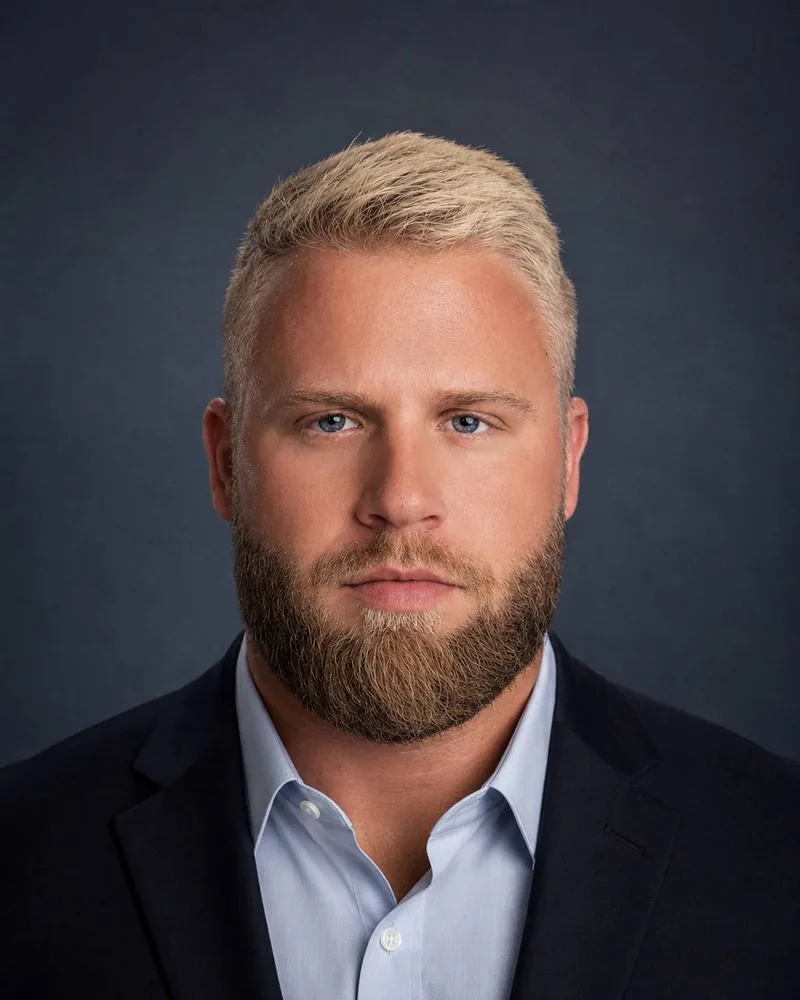
Tyk Sullivan
Serial entrepreneur in Tampa, Florida. Founder of Plutus Capital and NUMEN. More about Tyk →