Nobody in history has ever bought a top on purpose. Every single one of them believed they were early.
That’s the entire mechanism of FOMO, and if you’re searching for how to deal with it, the honest answer has three parts: recognize that the urge to buy is loudest precisely when the evidence is weakest, write your plan while you’re calm so the decision is already made when you’re not, and burn this into your head: missing a trade costs you nothing. Chasing one costs you real money. Only one of those is survivable in unlimited quantities.
Standard reminder before we go further: this is education and scar tissue, not advice. I’m not telling you what to buy. I’m telling you what the feeling does, because I’ve been its customer.
FOMO is lateness wearing a costume
Fear of missing out never announces itself as fear. It arrives dressed as research. Suddenly you’re finding reasons the thing that already tripled has room to run, and every reason feels like analysis, and none of it would survive one question: would I be this interested if the chart pointed down?
Your conviction showed up after the move. That’s not a thesis. That’s an alibi.
The tell is urgency. Real opportunities are usually boring for long stretches; I bought quietly for two years before anything happened. When something inside you says this specific week is the last chance you’ll ever get, that voice isn’t coming from the market. It’s coming from the part of your brain that also buys things at the airport.
The crowd is sure at the wrong time
A lot of whatever edge I’ve developed is just reading how crowds feel, and the pattern never changes: by the time everyone is sure, everyone is already in. Certainty is what fully invested feels like from the inside. There’s nobody left to convince, which means there’s nobody left to buy, and prices move on the next buyer, not the last believer.
So the loudest moment of agreement is structurally the most dangerous moment to join. The barbershop test has been retired and reinvented a hundred times, but the bones hold: when the people who never talk about markets can’t stop talking about one, you’re not early. You’re the liquidity.
The version nobody talks about
Everyone frames FOMO as a buying disease. Let me confess the other strain, because it’s the one that actually got me.
I’ve written the whole story of watching $2 million become $150K, so I’ll keep this short: at my top, I wasn’t afraid of missing some other trade. I was afraid of missing the rest of MY trade. Selling felt like leaving money on the table, and the fear of missing the next leg up held my hands still through the entire ride down. Same disease, different door. FOMO doesn’t just make you buy wrong. It makes you refuse to sell right.
Not gonna lie, that version cost me more than every chase I’ve ever chased, combined.
What missing out actually costs
Run the actual accounting on a missed opportunity. You keep your money. You keep your sleep. You keep your ability to think about the next one without a wound in the room. Total cost: a feeling, and feelings about counterfactuals are free. The market reopens tomorrow, and it has never once run out of opportunities.
Now the chase: real dollars in at the worst prices, real stress, and the special tax on top, which is what the loss does to your judgment. Every new trader touches the stove, fine, tuition is mandatory. But chased losses are angry losses, and angry money makes the next decision worse too. One bad chase can echo through five otherwise fine trades.
An old line traders pass around says the market transfers money from the impatient to the patient. FOMO is impatience with a research folder.
What I do about it now
I’m not cured. Let’s start there, because anyone who claims immunity to this is selling something. A thousand things still tug at me every green candle. The difference is I stopped negotiating with the feeling in real time.
The plan gets written when I’m calm: what I’d be interested in, at what kind of level, and what would make me wrong. Written down, before the adrenaline, because the version of me watching something rip is not qualified to make decisions and I finally know it. If a thing runs without me, it runs without me. My rule is dumb and it works: if the urge showed up after the move, the urge doesn’t vote.
And I remind myself what being early actually felt like, since I’ve lived it: it felt like nothing. Years of nothing. Boredom, doubt, buying while nobody cared. If what you’re feeling instead is a stampede at your back, you already have your answer.
Nothing here is investment advice. It’s a map of a feeling, drawn by a guy the feeling has beaten before, published so it beats you a little less.
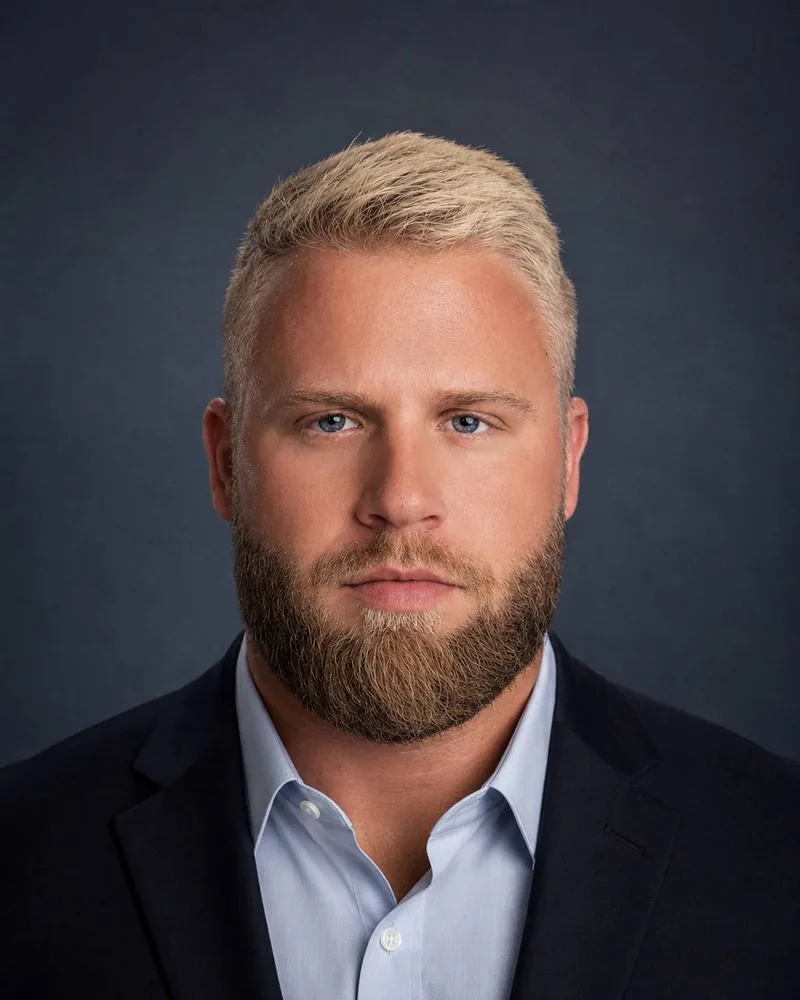
Tyk Sullivan
Serial entrepreneur in Tampa, Florida. Founder of Plutus Capital and NUMEN. More about Tyk →