If you are wondering why successful people wear the same thing every day, here is the direct answer: a uniform converts a recurring decision into a solved one, and it stabilizes identity while it does it. Attention is finite. Every trivial choice you delete in the morning is capacity you can spend on a choice that compounds. The outfit is the visible tip of a philosophy: decide the unimportant things once, so the important things get a fresh mind.
I did not learn this from an article about famous founders and their gray shirts. I backed into it, and I have the closet to prove it: the same black t-shirt, twenty years running.
Twenty years, same shirt
This was not a strategy at the start. Somewhere around the time other kids were learning what brands to want, I found the thing that worked, black t-shirt, and simply never left. Twenty years later it is still what I reach for, and the reach is the point: there is no deliberation in it. My hand knows the answer before my brain wakes up.
For years I would have told you this was laziness, and I have made a career of being honest that my systems exist because I do not trust my own motivation. But somewhere along the way I noticed the shirt was doing real work. Mornings had no fashion negotiation in them. Packing for a trip took four minutes. Nothing in my closet had opinions about who I was going to be that day. What started as a shortcut had quietly become infrastructure.
Decisions are a budget
Here is the frame that made me keep the shirt on purpose. Decisions are a budget, and everything draws from the same account. In my experience, the mind does not maintain separate reserves for important choices and trivial ones; a morning spent on forty small negotiations, what to wear, what to eat, which route, which playlist, arrives at the first real decision of the day already spent down.
You see the same principle everywhere once you look for it. It is why I eat the same ninety-second omelet without deciding to. It is why my training happens at the same hour without a daily vote. The pattern is identical each time: identify a decision that recurs daily, produces no compounding value, and still costs full price to make, then decide it once, permanently, and bank the difference.
The shirt is simply the most visible line item. Nobody built a fortune by choosing outfits well. So why pay for that decision seven times a week, for life?
A uniform is a promise
The deeper return took me longer to see. A uniform does not just save decisions. It ends a renegotiation.
Every morning, the person who dresses to be seen is quietly re-asking a question: who am I today, and who is it for? Different rooms, different costumes, different versions. There is nothing evil in that, but it is a tax, and it is a wobble. The uniform answers the question once: I am the same person in every room. The investor meeting gets the same black t-shirt as the grocery store, which is another way of saying the investor meeting gets the same man as the grocery store.
That consistency is not an aesthetic. It is a promise, kept daily, in fabric: what you see is the whole inventory. And like every small promise kept on repeat, it compounds into something identity is built from. I stopped deciding what to wear and, without noticing, stopped deciding who to be.
What you stop signaling
There is also a quiet freedom in what the uniform declines to say. Clothes are a signaling game, and signaling games have entry fees that never stop: keeping current, reading rooms, calibrating status. Wearing the same black shirt every day is a resignation letter from that entire competition. Not a protest, just a polite exit.
What I have found on the other side of the exit is that understatement carries its own weight. When you stop broadcasting, people are left to price you on output, which is the only ledger I want to be judged on anyway. The work becomes the outfit. I would rather be underestimated at the door and remembered after the meeting than the reverse, and the shirt arranges exactly that order of operations.
Keep a few objects that point somewhere
Now the counterweight, because I am not preaching emptiness. The point of muting the noise is that the few objects you do keep get louder.
As a kid I collected model cars, small-scale exotics, every Lamborghini and Ferrari I could get my hands on. My theory about ambition still starts there: you fall in love with the thing, you learn what it costs, and the gap between those two numbers puts a fire in you. Those little cars were not clutter. They were direction, parked on a shelf. There is still one dream car on the list decades later, a 1970 Chevelle, and when I picture it I picture it imperfectly, scratches in the chrome and all, because a flawed image feels less like a fantasy and more like a memory I have not had yet.
That is the sorting rule I actually live by. Objects that recur daily and point nowhere get standardized into silence: the shirt, the breakfast, the routine. Objects that point somewhere, that aim you at a future or anchor you to a meaning, earn their place and their volume. Most people run this exactly backwards, infinite variety in the trivial, and no shelf anywhere holding a picture of where they are going.
Design the default, then forget it
You do not need my shirt. The uniform is one instance of a move you can run across a whole life: find the recurring decision, make it once with your best thinking, then let the default execute forever without a committee meeting. Wardrobe, breakfast, training time, the first hour of the morning. Design the day once, deliberately, and then spend your daily attention only where the outcome is genuinely in play.
People fear this flattens life into routine. Twenty years in, I can report the opposite. The standardized parts of my life are not where the life is; they are the scaffolding that holds the attention up. The interesting decisions, the company, the bets, the people, the work, get a mind that has not already spent itself on cotton.
Decide the unimportant things once, so the important things get a fresh mind. The shirt never mattered. The attention always did.
Same shirt tomorrow. Different problem. That is the trade, and after twenty years I can tell you it is one of the best I have ever made.
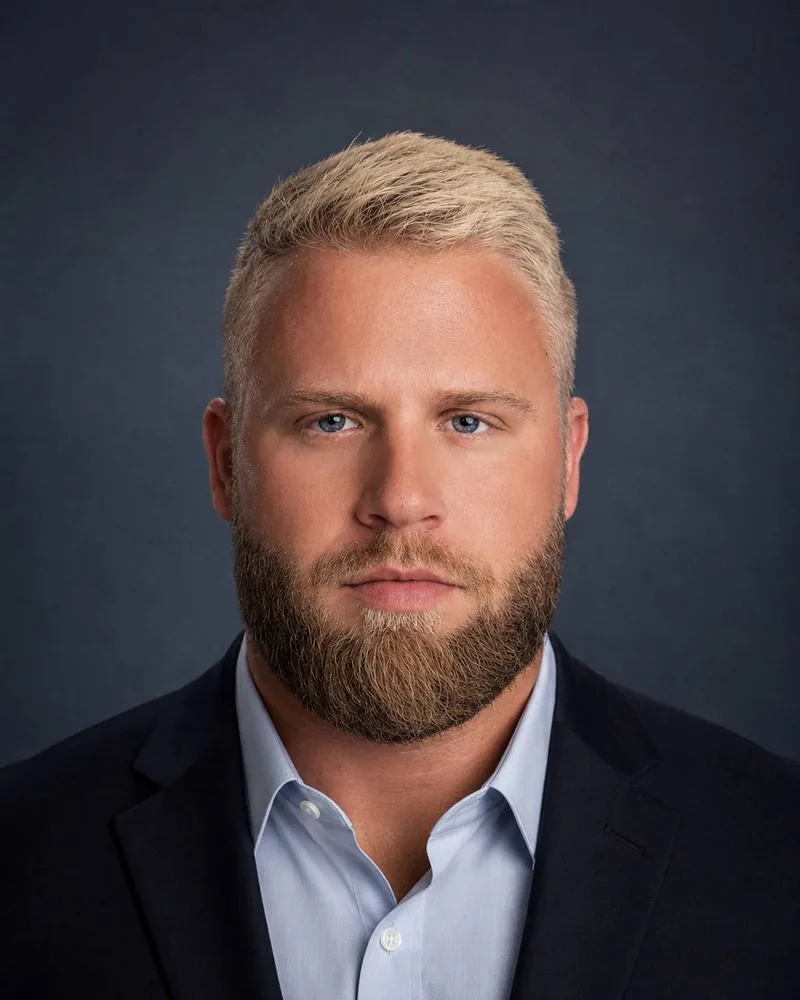
Tyk Sullivan
Serial entrepreneur in Tampa, Florida. Founder of Plutus Capital and NUMEN. More about Tyk →