Stand two companies next to each other and let them talk. Both say: we care about quality. Both say: customers come first. Both say: premium ingredients, expert team, trusted by thousands. The sentences are identical, because sentences are free, and anything free gets used by everyone.
Now watch a customer choose between them. One company attached things a stranger can verify: reviews with faces, lab results, a guarantee with teeth, ten years of receipts. The other attached adjectives. The customer does not deliberate long, and here is the direct answer to how you build trust with customers hiding inside that choice: trust is built with proof, not promises. Evidence a stranger can check outperforms any claim you can make, because the market long ago priced claims at zero. Your job is not to say trustworthy things. It is to make everything you say checkable.
Why promises are worthless as currency
It is not that customers think you are lying. It is that they cannot tell, and the incentives guarantee it. Every seller in every category makes the same promises, including the bad ones, especially the bad ones, because promising is the one part of business with no cost of goods. When honest companies and dishonest companies emit identical sentences, the sentences carry zero information, and customers correctly learn to ignore them.
I have written about the industry that perfected this: supplement bottles shouting adjectives on the front while the back panel quietly discloses or hides the truth. Every market has its version of the front label. Which means every market has the same opening for you: while competitors polish their promises, become the one whose claims come with receipts attached. The gap between said and shown is the whole trust market, and it is wide open in almost every category.
The proof ladder
Proof comes in three grades, and you climb them in order.
Borrowed proof. Other people vouching: reviews, testimonials, word of mouth, the customer who tells the story for you. Early on you have none, so you go get it: deliver disproportionately for your first customers, then ask them to say so where strangers can see it. Working cheap or free at the start in exchange for documented results is not weakness. It is buying inventory, and proof inventory appreciates.
Demonstrated proof. Evidence you generate on the spot: the free sample, the audit you do before being hired, the fix you make before the contract is signed. Demonstration collapses the trust timeline because the customer stops evaluating your promise and starts evaluating your work, and work is checkable in a way promises never are.
Accumulated proof. The compounding grade: years in business, a body of published work, a track record with dates on it, customers on year five. Nobody can rush it and nobody can fake it, which is precisely why it wins. The whole undeniable file is this ladder, climbed daily. Every rung you add is a sentence you never have to say again.
Show the process, not just the result
Here is the multiplier most businesses skip: proof of process. Results can be cherry-picked and everyone knows it. Process is harder to fake, so showing it earns disproportionate trust: the open kitchen, the disclosed supply chain, the build-in-public thread, the label that prints every dose. Companies that show their work get graded the way students who show their work get graded: generously, even on imperfect answers, because the grader can see there was no trick.
Showing process also does something subtle to you: it forces the process to be showable. The moment your operation is visible, the shortcuts die on their own, because you cannot display what you would not defend. Transparency starts as marketing and quietly becomes quality control. That is the real reason opaque competitors cannot follow you here: their process is not hiding by accident.
Put your money where the promise is
The strongest single proof a stranger can receive is watching you bet on your own claim. A real guarantee, a free first job, payment tied to outcomes: these convert your promise from words into a position. Customers read it instantly, because risk only moves in one direction when the seller is confident and the opposite direction when the seller is not. A company that will not stand behind its product financially is disclosing something, the same way a hidden dose is a disclosure.
Run the math before flinching at the cost. If the product is as good as you claim, the guarantee is nearly free, because few invoke it, and the trust it manufactures pays for the exceptions. If the guarantee terrifies you, the problem is not the guarantee. You just learned something about your product that your customers were going to learn anyway, at retail, in public.
Proof in the age of AI
One more reason this matters more every quarter: the machines write beautifully now, which means polished claims just became infinitely abundant. Every inbox, feed, and listing is filling with perfect sentences that cost nothing to produce, from senders who may or may not exist. When promises become free at industrial scale, their market value falls from nearly zero to exactly zero, and the entire premium migrates to the one thing generators cannot mint: verifiable reality.
So sort your proof by how hard it is to fake. Anonymous praise is now weak; reviews attached to real, checkable humans are stronger. Claims are worthless; time-stamped track records, third-party tests, names, dates, and faces hold. The showroom you can walk into, the customer who answers the phone, the founder who shows up in person: these were always good proof, and the flood of synthetic polish just repriced them into gold. The more the world fills with confident text, the more the market pays whoever can be checked. Position accordingly, because this trade has a decade left to run.
The personal version
Everything above scales down to one person, because founders are brands before their companies are. Your word is a proof asset with a running balance: every kept small promise deposits, every slipped deadline withdraws, and the balance is public whether you publish it or not. People do business with the person whose word cleared last time. The unscalable care that builds companies is mostly this: proof of character, issued in small denominations, daily.
So audit yourself the way a customer would. What can a stranger actually check about you? What have you shown versus said? If the honest answer is mostly sentences, you now know exactly what to build next, and none of it requires a marketing budget. It requires delivery, documented, repeated.
Nobody believes what you say about yourself. They believe what they can check, and they are right to.
So make everything checkable. Say less, show more, and let the receipts run the sales department. They work cheap, they never exaggerate, and nobody argues with them.
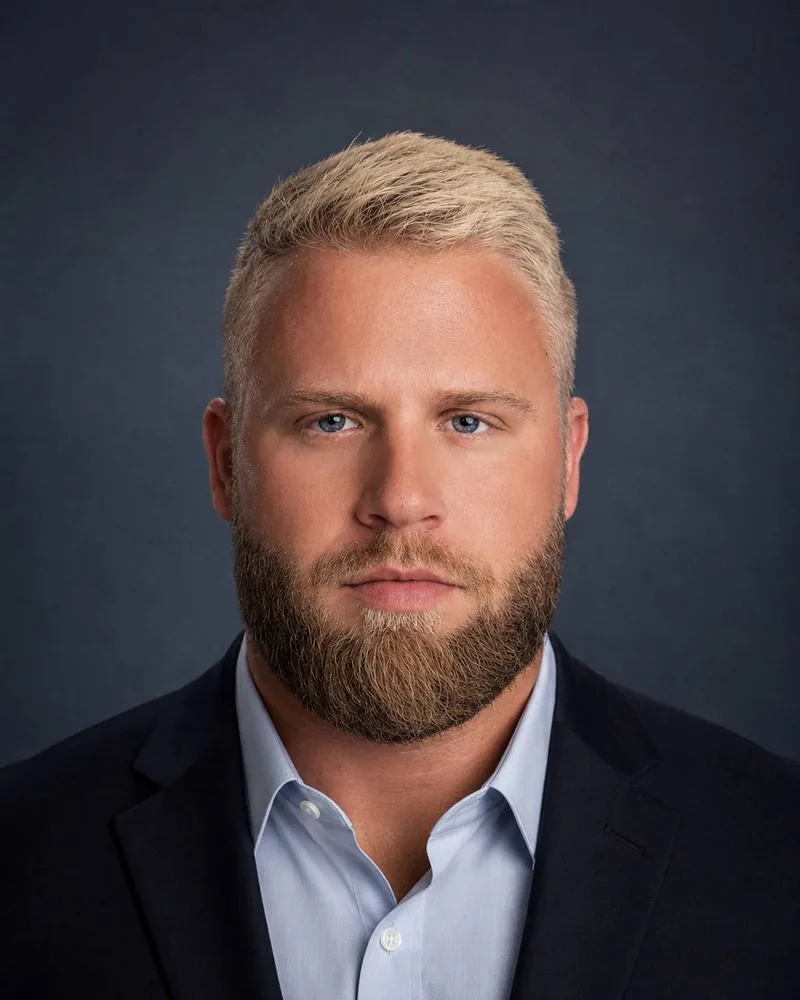
Tyk Sullivan
Serial entrepreneur in Tampa, Florida. Founder of Plutus Capital and NUMEN. More about Tyk →