If you are searching for how to find a mentor, here is the direct answer: stop asking strangers to be your mentor. That request almost never works, because it asks a busy person for unpaid, open-ended labor on behalf of someone who has shown them no evidence. Mentors are not found through asking. They are attracted through doing. Make your obsession visible, be useful and interesting where you already stand, and the allies volunteer. Usually they are not the people you would have picked.
I learned this in the least impressive classroom in my high school, during a period that existed on my schedule specifically because I did not want to be in class.
Why asking for a mentor fails
Run the exchange from the other side. A successful person gets a message: will you be my mentor? What is actually being requested? Their scarcest resource, time, delivered on a recurring basis, with no defined scope, no end date, and no evidence the investment will compound. The asker has usually done nothing yet. The whole proposal is: bet your hours on my potential, sight unseen.
Almost nobody says yes to that, and the people who do say yes to everyone are usually not the mentors you want. Meanwhile, the same successful people give away enormous amounts of guidance every week, voluntarily, to a different kind of person: the one already in motion. Movement is the application. There is no other form.
The study hall alliance
Senior year, I engineered my schedule into back-to-back study halls. I was not hiding this; school and I had an understanding by then, and I have written the whole story of that. On paper, those periods were dead time supervised by a teacher whose job was to keep a room of teenagers quiet.
Here is what actually happened in one of them. The teacher supervising the room and I ended up on the computer together, donating to charities we picked out side by side. And I tried to teach her trading. A kid who would not do homework, walking a teacher through how markets moved, while we decided together which causes deserved the money.
Nobody assigned that. There was no program for it. It happened because I was visibly obsessed with something real, and she was curious enough to sit down next to it. She did not have to believe in my grades to take an interest in my mind. That room held the least official learning on my schedule and the most actual learning in the building, and it taught me the pattern I have run ever since: allies do not respond to requests. They respond to evidence.
Make the obsession visible
People cannot join what they cannot see. That is the mechanical reason the ask-a-stranger approach fails and the study hall approach works. Nobody in that school could have known to help me with markets or business if the interest lived silently in my head. The moment it was out on the desk, out loud, on the screen, it became something another person could walk up to.
Most people hide the work until it is impressive. They want to be discovered fully formed. But the hiding is exactly what prevents the discovery, because a mentor’s pull is toward energy, not polish. A beginner openly wrestling with something real is far more magnetic than a résumé. Post the work. Talk about the thing. Let the obsession leak. You are not announcing that you have arrived. You are turning on a light other people can navigate toward.
Bring something to the table
Notice what the study hall actually was: a trade. She gave attention and legitimacy. I brought something she did not have, a window into a world she found interesting, and we built something together with the charity picks. Neither of us was doing the other a favor. That is why it worked.
Mentorship survives on the same economics. It is not adoption; it is exchange, even when the exchange is lopsided. Energy is a payment. Follow-through is a payment. Taking advice, acting on it fast, and reporting back what happened is the single highest-value payment a junior person can make, because it converts the mentor’s words into visible results, and that is the return on their investment. Show up with questions sharpened by real attempts. Bring what you are learning from the ground they no longer stand on. Empty hands make short mentorships.
Allies show up out of uniform
Here is the part I most want to hand to the version of me still sitting in that building. The people assigned to guide you often will not, and the people who guide you were often assigned to do something else entirely.
Teachers told me I would never be anything. The adults officially responsible for my development mostly graded my compliance and found it wanting. And the ally showed up in a study hall, out of uniform, in a role with no mentorship in the job description. If I had judged the adults in that building by their titles, I would have missed her completely.
So drop the casting call. Stop scanning for someone who looks like a mentor: the title, the gray hair, the stage. Judge people by one signal only, how they respond to your obsession. Some of the most credentialed people in your life will wave it away. Then somebody unexpected leans in, asks a second question, sits down next to the work. That lean is the whole interview. The people worth keeping announce themselves exactly this way.
The adult version of the study hall
The mechanics never change after graduation; only the rooms do. The adult version looks like this. Work on something real and let it be seen: publish it, ship it, talk about it where the people you respect already gather. Ask narrow questions instead of requesting relationships; a specific question about a real decision gets answered, an open-ended request for guidance gets archived. Be spectacularly easy to help: act on what you are given, quickly, and close the loop with what happened. Do that for a year and you will have mentors you never asked for, some of whom would flinch at the word.
And keep doing the volume that makes you worth finding, because the seat at the table is earned with evidence, and mentors read evidence the same way rooms do. Become undeniable and the guidance problem largely solves itself; quality people are drawn to obsession the way that teacher was drawn to a screen full of markets and charity picks.
Mentors are not found. They are attracted. Make the obsession visible, bring something to the trade, and judge every ally by one signal: do they lean in.
Nobody is coming to adopt you. Better than that: somebody is already nearby, out of uniform, waiting to see what you are working on. Put it on the desk.
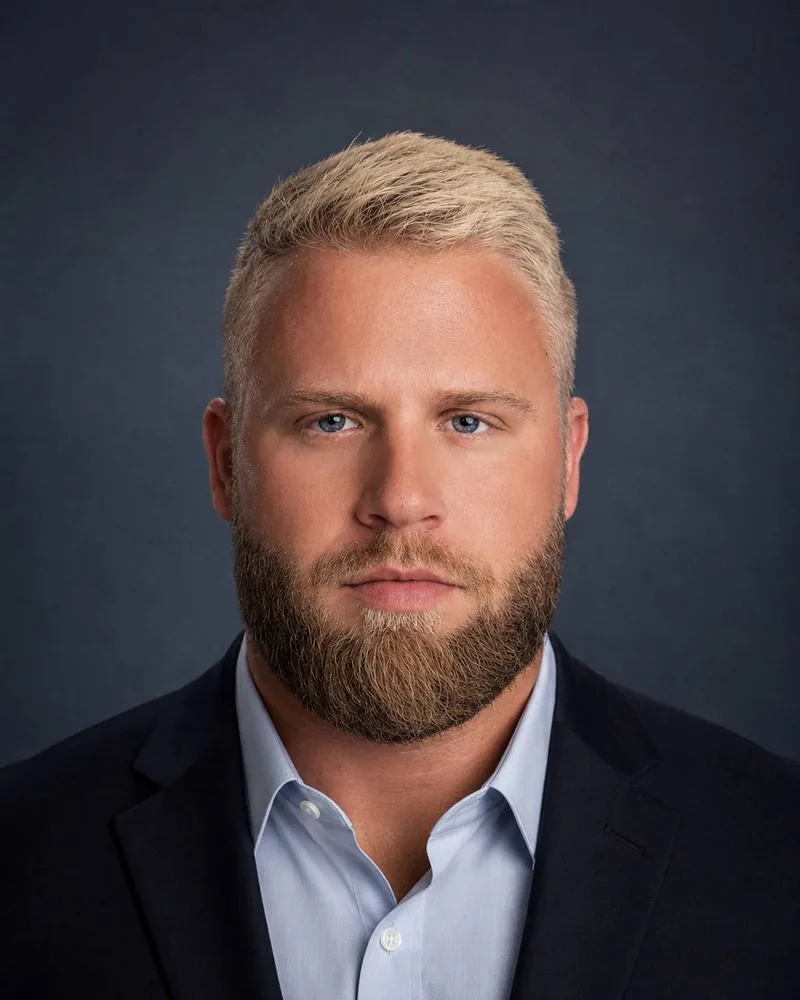
Tyk Sullivan
Serial entrepreneur in Tampa, Florida. Founder of Plutus Capital and NUMEN. More about Tyk →