The fastest way to get what you want is to become the person who deserves it.
Not through manifestation. Not through networking theater. Not through pretending you already belong in rooms you have not earned your way into. Do the work. Build the skills. Produce so much evidence that continuing to overlook you becomes unreasonable.
That is the shortcut. And since the question underneath this piece is the one people actually search, how do you get a seat at the table, here is the direct answer: you do not get chosen for the seat. You earn it, in public, with proof, until the room’s only remaining options are to offer you the chair or to look foolish withholding it. Everything below is how that actually works.
Stop waiting to be chosen
A lot of people spend their lives waiting for permission. They want somebody to notice them. Invite them. Approve them. Give them a title. Give them a chance.
There is nothing wrong with wanting an opportunity. But waiting to be chosen is a terrible strategy, because it puts your future on someone else’s calendar, and their calendar does not have you on it. The seat at the table is yours if you are willing to earn it. Learn what the room values. Build the skills the room cannot ignore. Create proof that you can solve the problems being discussed inside it. Then pull up a chair and sit down.
Not because you demanded attention. Because your work made the argument for you.
Make ignoring you irrational
You do not need everyone to believe in you. You need enough proof that disbelief becomes expensive. That is a completely different game.
Alex Hormozi has the cleanest version of the underlying math I have ever heard: do so much volume that it would be unreasonable not to succeed. I have carried that sentence for years. This piece is what carrying it actually looks like.
Most people try to convince the world with words. They explain their potential. Talk about their plans. Describe how serious they are. The world does not grade your intentions. It grades the work. Proof beats promises; make everything checkable. Show the finished product. Show the skill. Show the consistency. Show the result. Do it again.
Eventually, people do not have to believe what you say, because they can see what you have built. Your work should remove the need for an introduction.
Work until the outcome looks obvious
Now the honest part, because this is where the guru version of this idea lies to you. Success is never guaranteed. You can make good decisions, work hard, and still get blindsided. Timing matters. Direction matters. The market matters. Luck matters. Anyone who tells you that effort guarantees a specific result is full of it.
But you can do enough correct work that failure becomes increasingly unreasonable. Not impossible. Unreasonable. There is a difference, and the difference is the whole strategy.
You can become so skilled that opportunities begin finding you. So prepared that you are ready when timing finally breaks your way. So consistent that one bad month does not end the mission. So useful that good people want you in the room. That is what the work is really doing. It is not forcing the world to reward you. It is increasing the number of ways the world can reward you, until the surface area of your luck is so large that something has to land on it.
Hard work is not enough
There is one important catch. You cannot out-hustle a bad heading. Working harder in the wrong direction does not make you disciplined. It makes you tired.
The answer is not blind volume. It is correct volume. Do the right work. Measure what happens. Listen to the feedback. Adjust. Then do more. Direction first. Speed second. Never the reverse. A person moving slowly in the right direction will eventually pass the person sprinting in circles, and the person doing correct volume at full speed passes them both.
The goal is not to feel productive. The goal is to become effective. Those are different careers, and most people are in the first one.
Build skills no one can ignore
Ambition is common. Useful skill is rare. Everybody wants the result. Fewer people want the years of repetition required to become good enough to produce it. They want the business without learning sales. The audience without learning communication. The opportunity without becoming valuable. The respect without carrying responsibility. It does not work like that.
You earn leverage by becoming useful. You become useful by solving real problems. You solve real problems by building skills through repetition, feedback, and failure. There is no glamorous version of this. You practice. You get corrected. You realize you are not as good as you thought. You practice again. Eventually, the thing that once felt difficult becomes normal. Then you raise the standard.
And somewhere in that grind, your mindset has to catch up with your ambition, because you cannot build a different life while protecting every belief that created your current one. Stop treating discomfort like a warning sign. Stop interpreting rejection as proof that you do not belong. Stop making temporary emotions responsible for permanent decisions. This does not mean lying to yourself, and it does not mean pretending everything will work. It means becoming capable of continuing before you have proof. The person you want to become cannot require constant reassurance. That person has work to do.
Obsession is sustained attention
People hear the word obsession and imagine intensity. Late nights. Big speeches. Destroying yourself for a goal. That is usually not what wins. Real obsession is sustained attention. Thinking about the problem longer than everyone else. Improving when nobody is watching. Caring about details other people dismiss. Doing the boring work after the excitement is gone.
The most dangerous competitor is not always the loudest one. It is the person who quietly gets better every week. No announcement. No reinvention. No need to be seen working. Just progress. You want to work with enough focus that when people see you coming, they are grateful they do not have to compete against you. Not because you are ruthless. Because they know you will not disappear.
That is also where the advantage actually lives, because most people can work hard for a week. Some can do it for a month. Very few can continue when the work becomes repetitive and the reward remains invisible. The beginning is crowded. The middle is empty. Everybody loves launching. Almost nobody loves maintaining. The work does not need to be dramatic. It needs to continue. One day will not change your life. But enough directionally correct days eventually make your old life impossible to return to.
I am still fighting this too
I am not preaching this as someone who executes perfectly every day. I struggle with consistency. I get distracted. I sometimes want the easier answer even when I know better. I am far from perfect. I just understand that the work still needs to happen. Your feelings can have a seat in the car. They cannot drive.
The perfect day never shows up. You work with the day you have. Then you get up and do it again.
And retire the shortcut hunt while you are at it, because the fastest shortcut is to stop looking for shortcuts. Shortcut hunting feels productive because you are always learning something new: a new tactic, a new framework, a new platform, a new person announcing that the old rules no longer apply. Most of it is procrastination wearing a business-casual outfit. The fundamentals are sitting right in front of you. Make something valuable. Learn to communicate it. Put it in front of people. Listen to what happens. Improve it. Repeat. No hacks, no fakes. You do not need another secret. You need more evidence.
The seat at the table is not reserved for the smartest person. Or the loudest. Or the person with the cleanest story. It belongs to the person who became useful enough to deserve it.
Do the hard work. Build the skills nobody can ignore. Adjust when reality tells you that you are wrong. Keep going when the reward is late. Produce so much evidence that the argument ends.
Then pull up the chair. Sit down. You earned it.
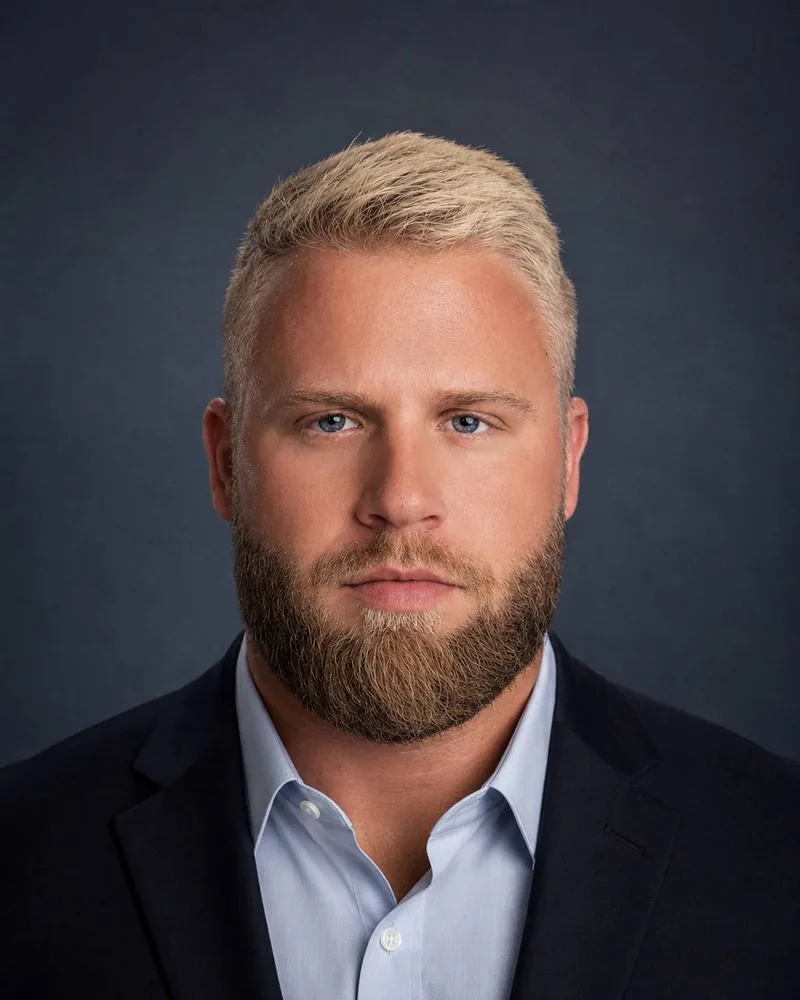
Tyk Sullivan
Serial entrepreneur in Tampa, Florida. Founder of Plutus Capital and NUMEN. More about Tyk →