My dad came home from the bar one night and told my mom the name should be Tyk. She said absolutely not.
You can see how that turned out.
She grew into it, to her credit. I grew into it too, through a childhood of Little Tykes jokes and a lifetime of drive-thru speakers butchering it in ways I didn’t know were possible. And somewhere in all that I accidentally got a twenty-year education in the thing people search for when they type how to name a company. So let me give you the short version first: pick a name people can say out loud, spell after hearing once, and find with one search. Then stop overthinking it, because the name is maybe 5% of the outcome. The promise you attach to it is the rest.
Now the long version, because the 5% is still worth getting right.
The name came from a bar
Here’s what my dad understood, drunk, that most founders miss sober: nobody forgets a name like Tyk.
There are costs. I’ve repeated it three times to every barista in Florida. Autocorrect fights me daily. But I’ve never once been confused with somebody else, and in a world where your name is your search result, that's not a small thing.
A unique name cuts both ways
With a name this unique, anything you ever do is really easy to find. It can ruin your reputation instantly, or you can build up a very good name and everyone knows it. There’s no hiding behind the seventeen other guys with your name, because there are no other guys.
Same math for a company. A distinctive name means every review, every article, every customer story attaches to you and only you. Which is wonderful right up until the day it isn’t. A unique name is leverage on your own behavior. Name something distinctively and you’ve signed up to be worth finding.
The generic name has the opposite problem. Call your company something like Premier Solutions Group and you’re unfindable in the noise of every other Premier, Solution, and Group on earth. Safe, forgettable, and invisible. I’d take the drive-thru butchering every time.
Everything I’ve named, graded
I’ve named a lot of things, and honestly the report card is mixed.
In middle school I rebottled my stepdad’s off-brand soda into singles and needed a label, so I printed TZ Energy at home. My initials plus the most exciting word a twelve-year-old knows. It worked because the label was the whole business, and because my customers were classmates who’d have bought it named anything.
My lawn company was called Green Lawn. A lawn company. Named Green Lawn. Real creativity there. And you know what? It didn’t matter even a little bit. A hundred-plus clients hired the kid who showed up, not the name on the flyer. That’s the most important naming lesson I own: the boring literal name attached to reliable work beats the clever name attached to nothing.
Later came a streetwear label I named TYK, and I made it an acronym: Think You Know. I liked that one because it worked on two levels, my name and a little attitude, and streetwear is a category where the name carries actual weight. Apparel is identity. Lawn care is a result. The more your product is worn as a badge, the more the name matters. The more it’s bought as an outcome, the less it does.
(Side note: in middle school I also owned over 300 short, brandable domains, which I’ve written about selling too early. Collecting names before I had companies to put under them. Some kids collected cards.)
The tests that actually matter
When I name something now, it has to pass four checks, and none of them involve a branding agency.
The drive-thru test. Say it through a bad speaker to a stranger. If they can repeat it and spell it, you pass. I hold this test dear for personal reasons.
The search test. Type it into a search engine before you fall in love. If page one is already crowded with something established, you’ll spend years fighting for your own name. You want open ground, or close to it.
The domain-and-handle test. Clean domain, matching handles, no hyphens, no creative misspellings you’ll be explaining forever. If the exact name is taken, a short modifier beats mangling the spelling.
The out-loud-in-a-sentence test. "I ordered it from ______." "I work at ______." If it sounds ridiculous in the sentences customers will actually say, keep going.
Notice what’s not on the list. Deep meaning. Hidden mythology. Whether it made your buddies nod at dinner. All of that is for you, not the customer, and the customer is the only vote that counts.
The name is the container, not the contents
I’ll be straight with you: founders obsess over names because naming feels like building and costs nothing. Weeks on the name, wandering around the house saying candidates out loud, while the product sits unfinished. I’ve done it. It’s procrastination in a creative costume.
A name is an empty container. Nike meant nothing until shoes and decades filled it. Green Lawn meant nothing until a kid kept showing up every week, and then it meant that kid shows up. The promise fills the container, and the promise is built out of kept appointments, honest products, and fixed mistakes, none of which you can brainstorm.
So run the four tests, pick the least-bad option on the whiteboard, and go build the thing that will one day make the name mean something. Worked for a kid named Tyk. My dad, wherever that bar was, called the shot early: make the name easy to find, then give people a reason to look.
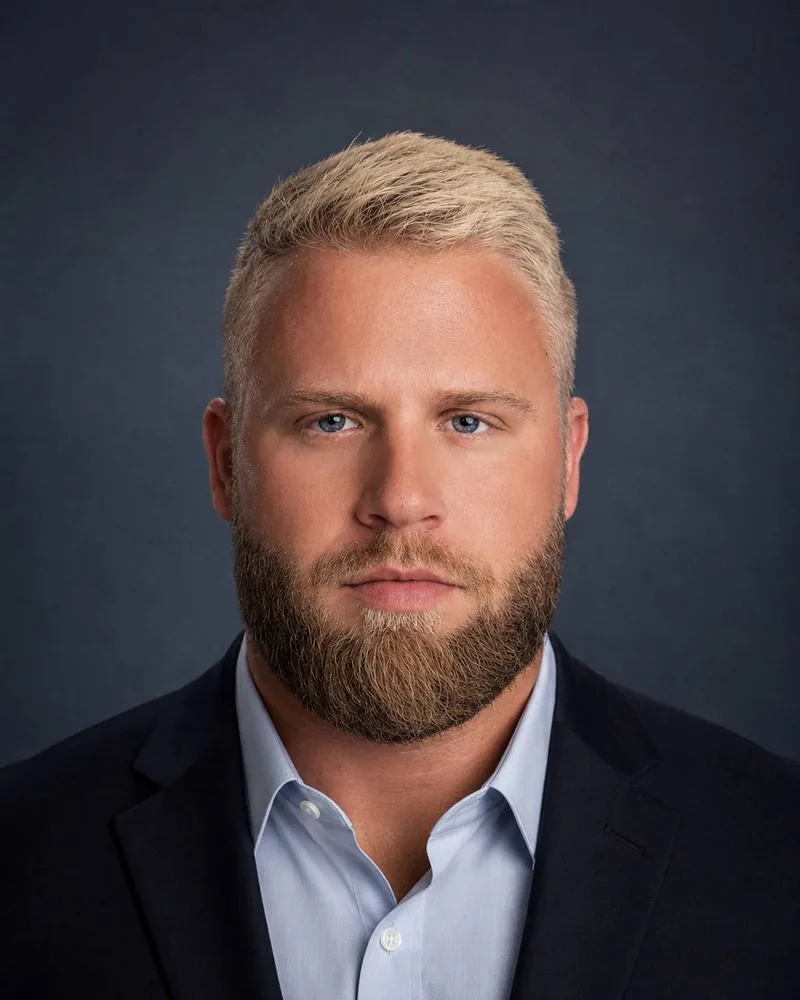
Tyk Sullivan
Serial entrepreneur in Tampa, Florida. Founder of Plutus Capital and NUMEN. More about Tyk →